Description
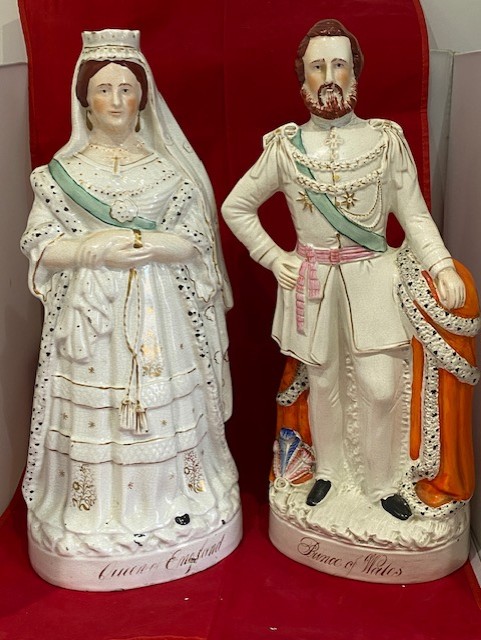
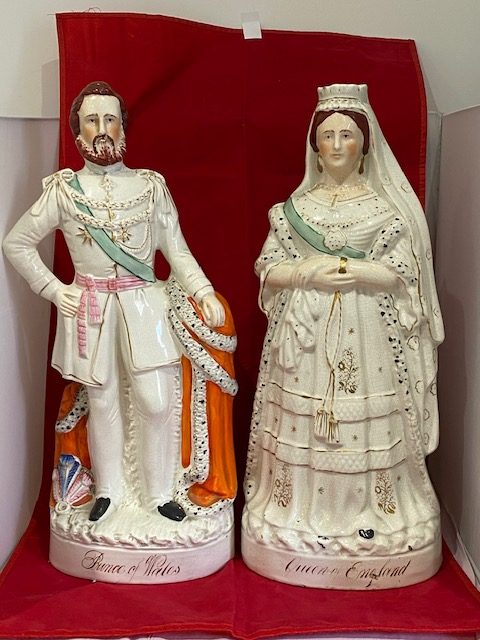
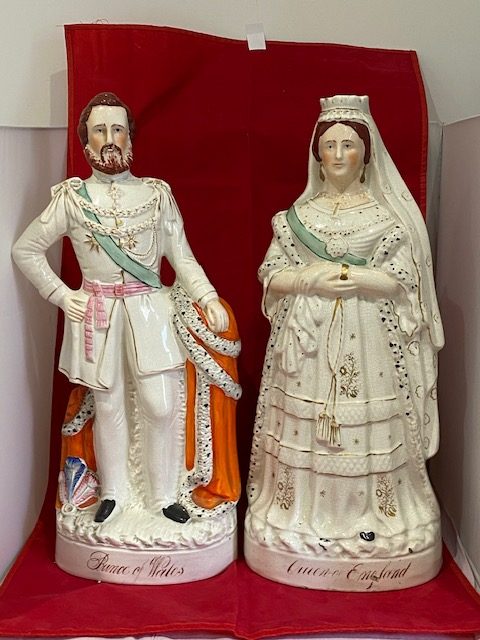
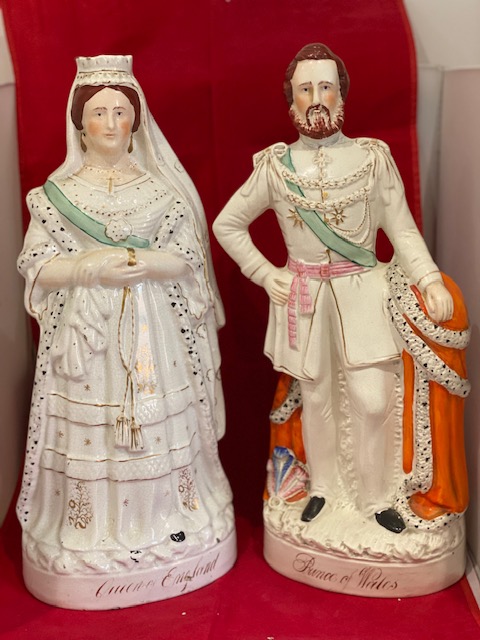
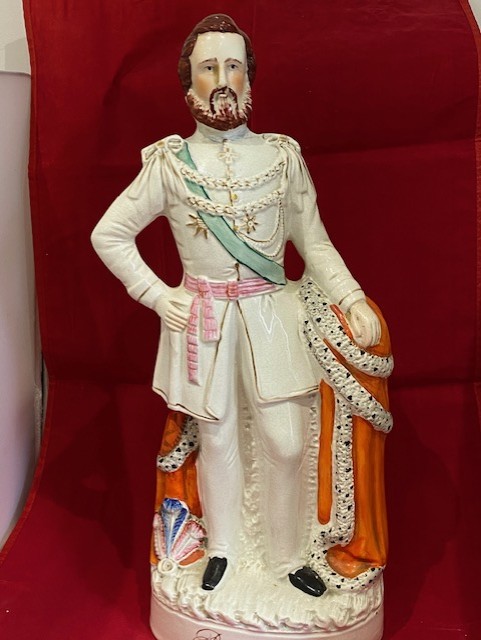
Large Staffordshire Portrait Pair Of Queen Victoria And The Prince Of Wales c.1880
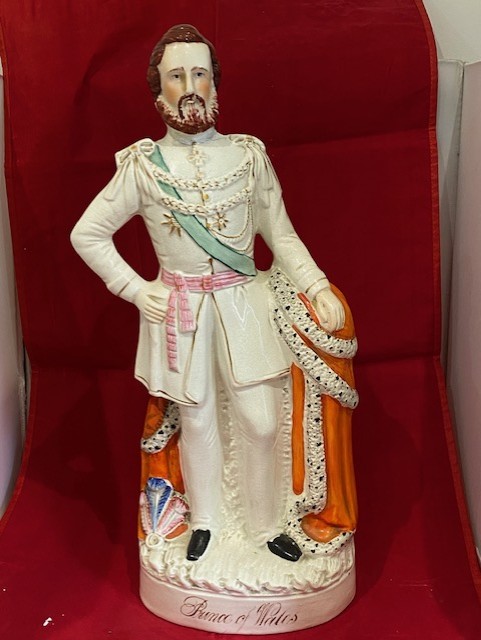
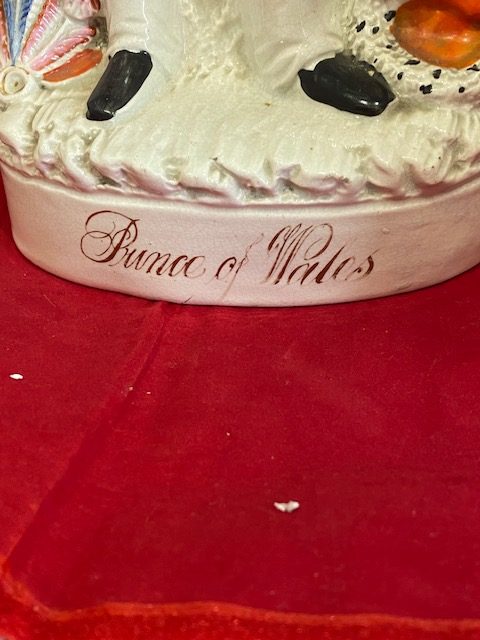
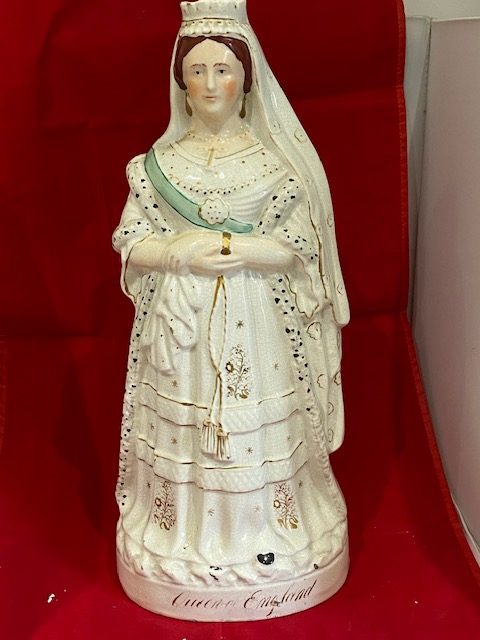
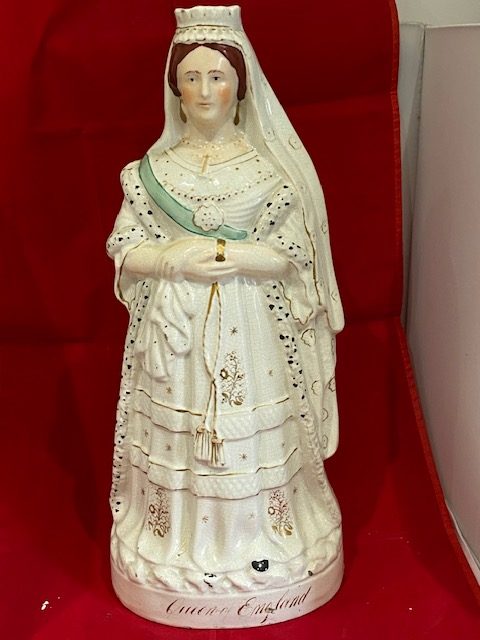
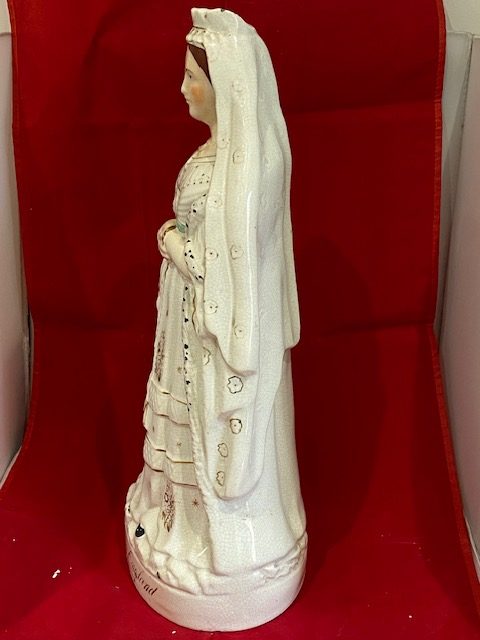
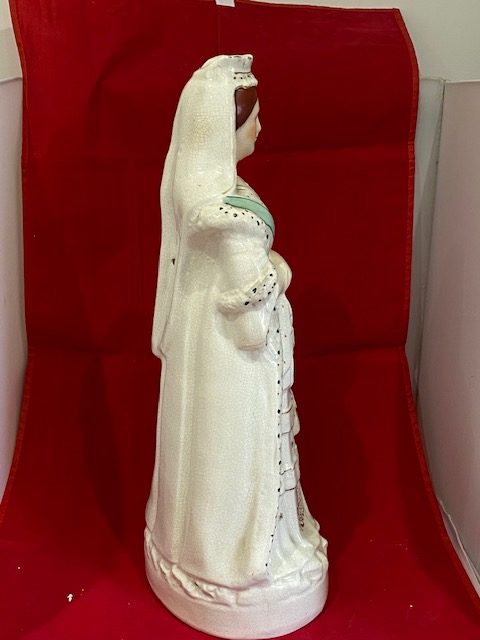
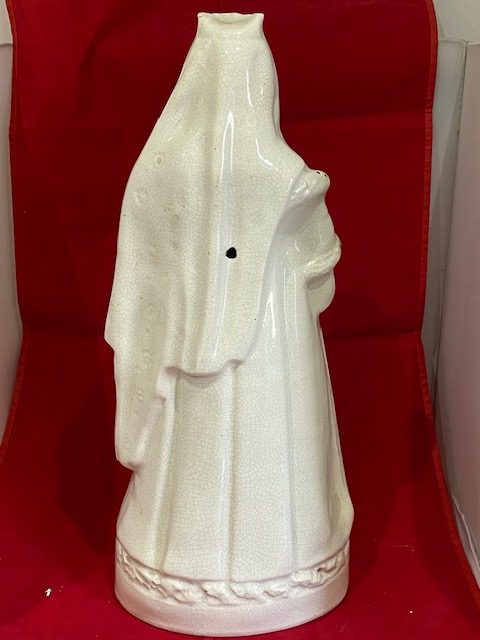
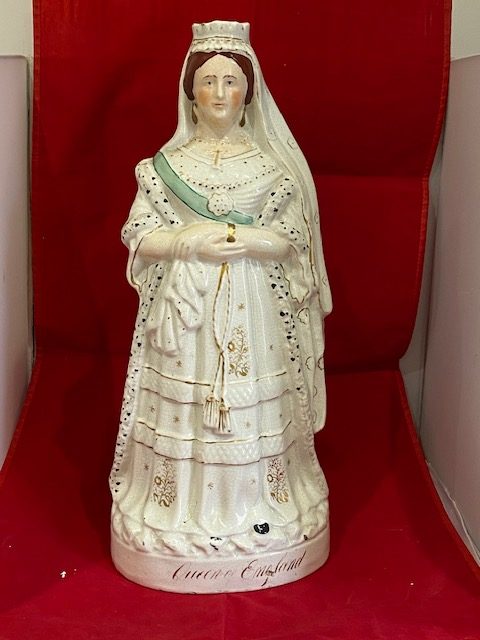
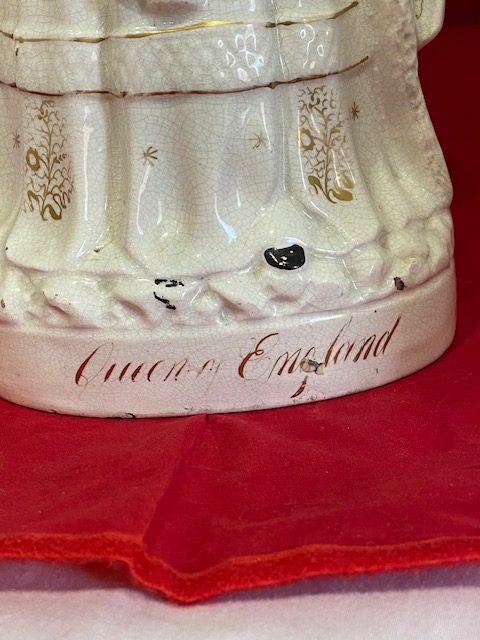
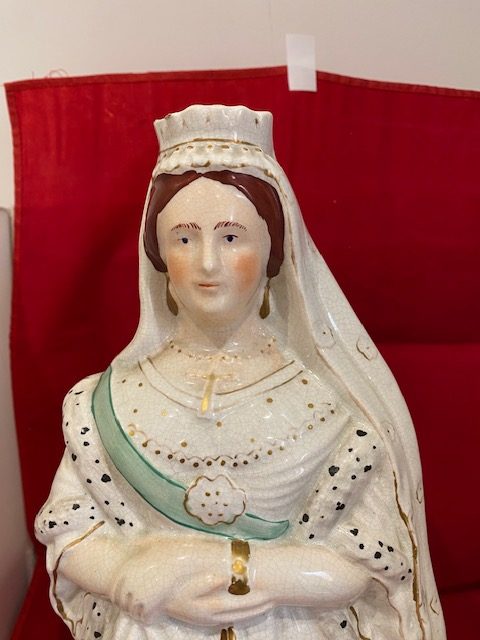
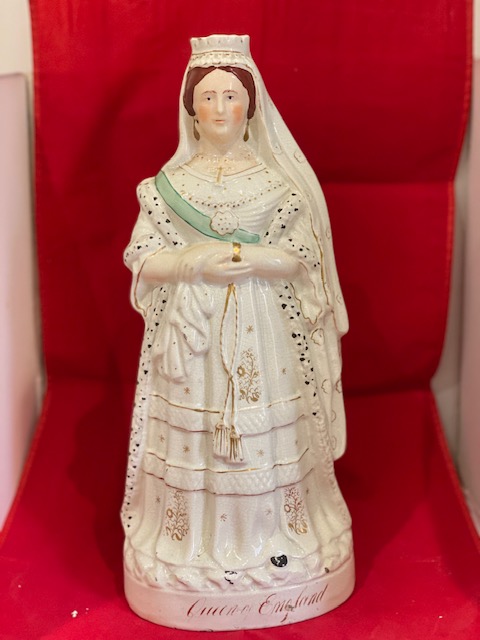
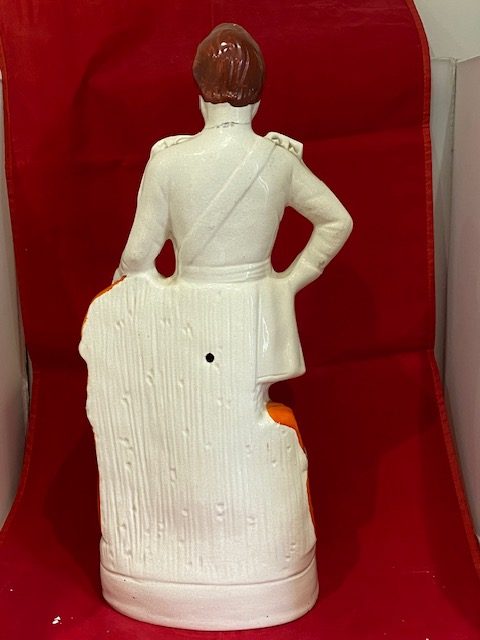
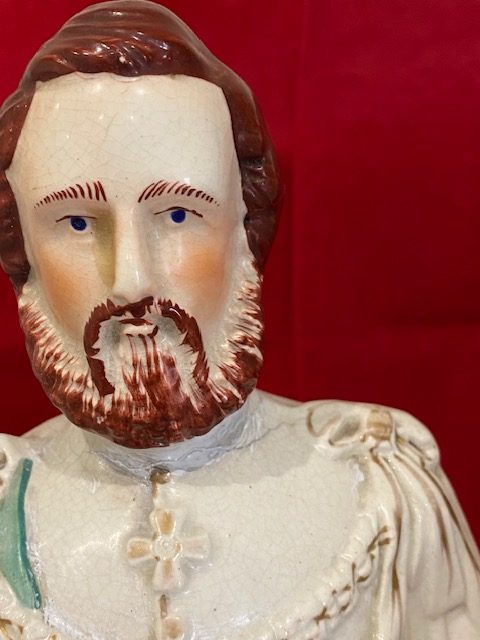
This is a large pair of Staffordshire portrait figures made in earthenware during the later part of Queen Victoria’s reign. It depicts Queen Victoria in full regalia and wearing the garter sash, and her son the Prince of Wales in military uniform also wearing the garter sash leaning on an ermine robed draped pillar with the Prince of Wales feathers at his feet. The figures have been hand painted in overglaze enamels and gilt (now worn) to highlight their faces and aspects of their clothing.
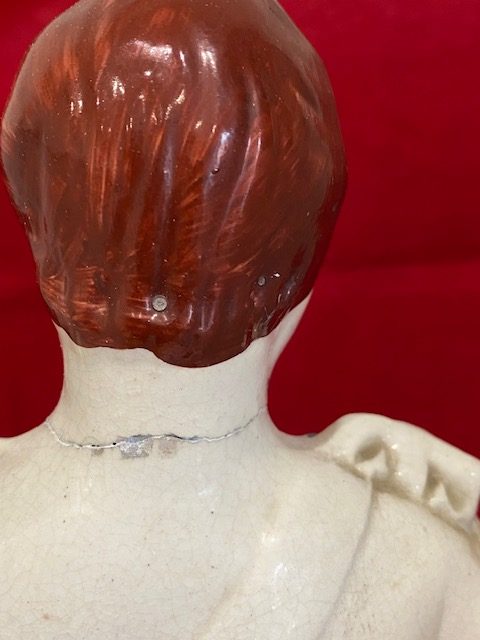
The prince of Wales head has been detached at some point and glued back but still displays well and is hardly noticeable Queen Victoria is in good condition for her age. This is a great pair of figures to add to any collection
Albert Edward (1841–1910), the eldest son of Queen Victoria and Prince Albert, was the Prince of Wales for nearly 60 years (1841–1901), the longest in British history. Known as “Bertie,” he lived a glamorous, leisure-filled life in high society, often excluded from state affairs by his mother, and acted as a popular, dashing diplomat on foreign tours.
Victoria (Alexandrina Victoria; 24 May 1819 – 22 January 1901) was Queen of the United Kingdom of Great Britain and Ireland from 20 June 1837 until her death in 1901. Her reign of 63 years and 216 days, which was longer than those of any of her predecessors, constituted the Victorian era, a period of industrial, political, scientific, and military change within the United Kingdom marked by a great expansion of the British Empire. In 1876, the British parliament voted to grant her the additional title of Empress of India.
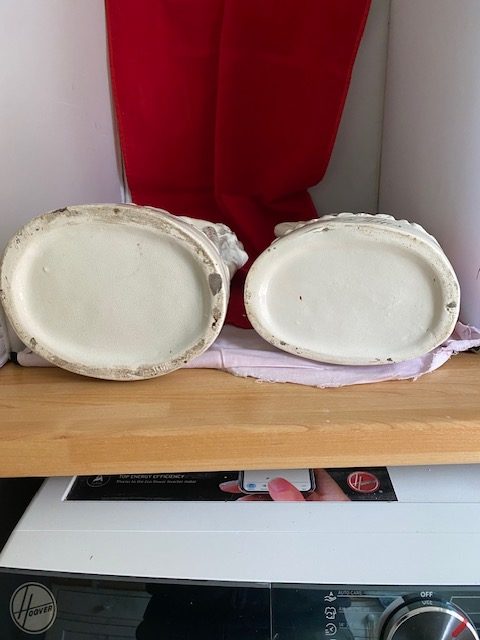
Staffordshire figures are a type of popular pottery figurine made in England from the 18th century onward. Many Staffordshire figures made from 1740 to 1900 were produced by small potteries and makers’ marks are generally absent. Most Victorian figures (1837 to 1900) were designed to stand on a shelf or mantlepiece and are therefore only modelled and decorated where visible from the front and sides. These are known as ‘flatbacks’. They were shaped either by press moulding or slip casting